Friday, May 30, 2008

MP 5/30/08

Traders,


The action in oil futures seems more like a high volatility dot.com stock. Oil prices initially surged from $128 to $133 in less than 10 minutes as the Department of Energy reported that crude inventories fell by 8.88 million barrels, the biggest drop since 2004 when Hurricane Ivan forced Gulf of Mexico oil platforms to shut down. The price started spiking as supply concerns would out strip a demand!

But wait, did I forget to mention that there is a bunch of oil in tankers and we could not unload them fast enough (because of weather)? So there is really MORE oil, but it couldn’t be added into the inventory numbers because it is actually on tankers! Then as fast as oil ripped to $133 it came crashing down to $126. I heard an oil trader yesterday on Bloomberg saying he has never seen this kind of action in his 20 years of trading. The whipsaw in directions and the sizes of the move is unprecedented. It’s as if each story is sending jolts up and down into the price of oil and one thing is for sure – volatility is expanding not contracting.


Yesterday economist and analyst could not agree as to the supply issues as the report added additional confusion with not being able to unload tankers. This morning oil has already had a range of 125 to 128 in an hour.

No doubt the oil whipsaw is moving everything and I would have to say the band of volatility is widening – expect to see oil to trade easily between 140 and 120 in any given day. At these plus $100 prices – big dollar moves are to be expected.


__________________________________________
U.S. Consumer Spending Rises


No doubt we are facing a slow down and the U.S. consumer spending slowed in April as income gains weakened – indiciative of a slowdown, but the question is how bad is it?

The .2% rise in April has decreased from the .4% rise in March – but incomes grew by .2% - partly due to the billion dollar stimulus and tax rebates. Economist argue that the April numbers may not be a good measure that the economy is recovering due to the stimulus package with artificially increased incomes and boosted spending – even with the stimulus checks the spending slowed more than the government (Paulson) had forecasted. The .2% rise was expected by the economist forecasts.

The report shows that consumer spending rose at 1% pace last quarter, the smallest gain the 2001 recession.

I am sure this report will arm both camps (recession / nonrecession) and the bar debates this weekend will show no victor, just like the Democrat Primaries.

Of course the report shows that Core inflation eased – don’t ask me to do the math on that.

__________________________________________
Dell Surges and pushes futures up in the pre-market


Dell – which had been struggling against Hewlett-Packards recent surge and also seeing general PC market share being taken away by Apple (since they have added Intel Processing power to their lineup) has surged as their report shows sales had beat expectations. There turn around strategy is making a difference.

Last year they introduced a sleek notebook (ultra-light) to compete in the market place – the new look and colors has changed the boring black/grey note book look and is borrowing some of the Apple philosophy. Additionally – after seeing that gaming computers (top of the line in the $2500 - $3500 range) is another segment that has grown. They have been increasing their gaming rigs and are taking a fairly strong stand in that sector as well.

However, probably the biggest strategy that has benefited them was selling through retailers and opening their own Dell kiosks in malls across America – this has helped them make large strides against their larger rival Hewlett-Packard.

It is the lap-tops that are their big mover and make up 2/3rds of the consumer business – that market rose 22%.

Additionally they are looking to expand in Asia as that sector continues to be the leading growth area in sales for them – and the weak dollar has helped boost sales in the Asia/Pacific region.

Dell shares up strong in the pre-market $2 points – pushing the futures up.

_________________________________________
Moody’s “implied” ratings lab reveals Ambac and MBIA as JUNK


Surprise, Surprise! With credit ratings being questioned daily as structured financial products rated AAA have failed – credit rating agencies look to new methods to rate credit based on risk. Moody’s new unit, Moody’s Analystics, use credit-default swap prices and actual market liquidity and pricing as an alternative system for grading debt (probably a better one). The surprise – these ratings differ SIGNIFICANTLY from Moody’s official ratings. These ratings show (based on price, liquidity, and markets) that these structured products have inhertiantly more risk than the typical credit ratings – at the end of the day you can’t argue price.

So how do the two largest bond insures (Ambac and MBIA) rate based on actually pricing and liquidity, rather than the typical Moody’s credit ratings? Well – based on Moody’s Analytics they rate Caa1 or you could call it what it is “JUNK” – just above default. Remember – these companies had lost a vast majority of their reserves, failed on some insurance, and have been actively rasing money or selling their own stock to build cash reserves – but Moody’s has maintained AAA ratings on them (as if they were as good as a U.S. Treasury).

However – the only reason they maintain the rating of AAA is to keep them from default – but even the bigger picture is to make sure that many of the AAA bonds they insure also do not default. 100s of billions of investments in the bond market by Pensions and State Funds need the coveted AAA rating and the insurance that comes with that – it is part of their charter – otherwise they would be forced to sell. Ambac and MBIA need AAA ratings in order to insure AAA products. These two companies insure trillions in bonds!

``The only thing holding them at AAA is simply the model that the rating agencies claim they use to judge that capital and the fact they know that if they downgrade the companies, it'll push them into default,'' says Backshall, of Walnut Creek, California- based Credit Derivatives Research LLC.

However, Moody’s is sticking to their AAA credit rating of MBIA and Ambac regardless of what their OWN Moody’s Analytic department rates them – which is at the opposite end of the field. It looks to be more of a political game as they don’t want to budge.

The big surprise was that they didn’t manage to keep this from going public, but talks about the measuring risk via price and liquidity has been lighting up the phones on most swap traders desks. There was no way to keep this a secret – not with the pricing and trading in an already trumblant market.

_______________________________________
Futures – Pre-Market


The Futures are getting a good pop from the great news from Dell. The futures are out-pacing the cash by a couple of points – so expect some upside jolt to the market as Arb traders buy the basket against the short futures. As long as you see 2-3 points vs. FV – expect the upside jolt at the opening. However – it seems to be getting squeezed a little as oil starts a rally again.

______________________________________
Support / Resistance


What a week – we had a big sell off last week, a short stabilization and now a new rally. Oil has pulled back and the dollar strengthen. A couple of indices broke through and a couple are just shy of resistance. Can we stay above it – if the futures in the opening are an indication – then yeah.

INDU 12400 / 12800 (We had a good run yesterday and then a pull back into the close, we did break the 12600 short-term resistance and stayed above it – a good sign of short-term support. Now let’s see if we can move up towards that 12800 level. 12600 is the pivot point – it would be nice to see it close above it today to see strength going into the weekend.)

NDX 2000 / 2050 (We are back above that 2000 level and DELL will be pushing it harder. The tech sector has been a mix basket of late – there is AAPL and GOOG which have driven this index hard – but AMZN, EBAY, and MSFT have all been weak to down in this rally. This is really about the over weights out running the rest of the index by a long shot. Expect more volatility not less.)

SPX 1380 / 1400 (We almost got to close above 1400 and I thought we were going to, but the pull back into the close took us back down. Can we get above it – well DELL is going to help and the futures show that we will. Watch the close!)

RUT 720 / 740-750 (We are up in that resistance band between 740-750 again – this showed serious strength in the broad market. Let’s see if we can get through 750, or at least stay above 740.)

______________________________________
Conclusion


Oil made a significant pull back yesterday and the day before – however in each of the last 4 pull backs in oil (since Dec of 2007 all between 5-10%) it was just a launching pad for another huge run to the upside. Pickens, Rogers, and the rest are buyers on every pull back. Is this just a short-term pull back like the other moves before another run, or is oil now in a Bear slide. I don’t think a couple of days will be indicative of a Bear move, I also think we need to see it get BELOW 120 before we say there is a correction in the cards. Also that oil inventory report was confusing and shocking at the same time. The action in that 30 mins down-up-down was just crazy.

The credit rating story I think will continue through the year – why I am still skeptical about the economy turning around, well if credit rating agencies are keeping AAA ratings on companies that insure trillions in bonds, while their own new analytic’s depart based on PRICE has them rated as junk – it still seems that the transparency is foggy at best. What happens if Ambac or MBIA fail or default? The write-downs continue – so I don’t think we are out of the woods yet.

Play the bull side but be careful at resistance, take some off, and make sure to hedge those hard deltas! I have a feeling that the summer is generally going to be the calm in the storm.


Thursday, May 29, 2008

MP 5/29/08

Traders,

While we didn’t see big moves in the market yesterday – no doubt volatility played a part as oil rallied back up putting the squeeze on the market – until in the late trading session we saw the market recover. We are hovering back up towards resistance levels and looking (and almost needing) something to punch through and push this market higher – however it’s as if this economy is a rag doll being tossed from one side to another. If it is not oil, it is housing, if it is not housing, it is inflation, etc.


All investors and even those that are not in the market are taking notice to the daily economic news waiting with baited breath for something to happen. It is an interesting environment as consumers not in the market are starting to take notice of financial products like futures, commodities, metals, and inflation. Consumers are feeling the economic forces squeeze them (higher gas and food prices, the housing bubble, etc.) – they are starting to take notice. As the general election draws near we will probably hear more about the economy than anything else – because everyone is feeling it at some level.

For now – we wait and cling to each bit of data that befalls us ready to “knee jerk” as if that one piece of data is the confirmation that the worse is behind us or the next shoe to drop.

With uncertainty comes volatility.

______________________________________________
10 year bond yields climb – as inflation creates weak auctions


The 2 year note auction yesterday meet very weak demand as the government is trying to raise money (no doubt to justify the printing of billions of dollar – thus and added pressure of inflation). The $30 billion auction was tepid at best – and the weak auction also saw a decrease in the 10 year bond which rose to 4.05% (the highest since last year).

China had mentioned in Jan of 2007 that they would not be renewing up to $1 trillion in U.S. treasuries as they came due and several other countries have been following a similar course (but for different reasons). While Bernanke initially tried to serve two masters (the banks during the initial stages of the credit crisis and the economy) he moved slowly with 25 bps cuts – hoping not to create inflation (and scare away large foreign buyers of U.S. treasuries) while at the same time do his best to offer relief to the banks strapped for cash as overnight lending tighten. But the slow 25 bps cuts (one after another didn’t help) and he was faced the fork in the road – either cut rates hard and fast, pour money in the system, narrow the spread between discount and target, and allow investment banks to borrow at the discount window to keep banks from failing (thus not serving the economy or the dollar) OR not cut rates and let the banks sort themselves out and instead try to keep inflation at bay and strengthen the buying power (which is what the ECB did). We know his choice and the outcome has been an increase in inflation.

Currently there is no incentive for China or for that matter any nation to purchase large sums of U.S. treasuries – the reason is simple, why would you want to buy a financial product (treasury) were the underlying asset (the dollar) is losing value (via inflation) and for that assumed risk get only paid a paltry 2%? If the dollar is weak and getting weaker isn’t the whole function of interest rates is to off-set credit risk? Needless to say as long as the dollar remains weak and as long as interest rates are very low – there is really no incentive to buy them – not for foreign nations – but guess what not even for U.S. investors.

While the CPI (as you know I take with a grain of salt) is reporting inflation over 4%, why would you buy a interest rate product (2-year treasury) that is yielding 2-2.5%? At the end of the year – you actually lost money (via the loss of buying power). I would argue that the situation is much worse, because if we use pre 1990 methodology for CPI calculation we are running closer to 8% inflation – but that is just math.

Today the government is trying to raise $19 billion in the 5-year debt instrument – will it be as weak as the 2-year? Probably.

The dollar is seeing some strength in the early morning – but we are still way above that 1.30 mark against the Euro - which was a serious spot last year for the currency swap forwards.

The dollar needs strength and interest rates need to go up to attract investors to pay down the government debt – until then…..well…..

_______________________________________________
U.S. economy grew more than previously estimated


U.S. economy grew in the first quarter as the trade deficit shrank. The weak dollar has helped the trade deficit and several economist would argue that shows that the economy is strong – but I would argue that is only one piece of the puzzle. Ask the question, Why did the trade deficit shrink? and you quickly see that a very weak dollar is the reason. Is that a good thing? Some would argue yes and traditionally in a manufacturing and industrialized country it is great, but we have over the last several decades have become a consumer nation – we rely MORE on imports from energy (oil), food, even durable goods. And the weak dollar is a double edge sword.
While the trade deficit maybe good and several companies are doing very well – it does not mean a rosy picture for consumers – but rather just a result of a very weak dollar (and their unfortunate loss of buying power). Sure – some jobs maybe created as certain companies expand to meet overseas demand – but we are not that manufacturing country of yester-year where a boom in exports means jobs for everyone. We are a service / consumer nation.

I will take my observation one step further – those companies that are doing well with overseas sales (a decrease in the trade deficit) – take a look were they ACTUALLY manufacture their products! They maybe head-quartered in the U.S., but where are they doing their manufacturing? I would argue that politicians are right and there is something to cheer about with job creation – if you live in Mexico or many other nations that manufacture the products we sell. Apple maybe a U.S. company – but if you look at all the parts in a IPhone – you quickly realize that almost everything about it is built overseas.

Additionally – energy and fuel prices may squeeze growth growing forward, while we may not be in a recession (yet) – I think the National Bureau of Economic Research has a better definition (rather than having to be negative) – they define it as “contractions as a significant decrease in activity over a sustained period of time.”

No doubt expansion is slowing – but this report will be the discussion of talking heads all morning and I am sure both sides will be able to justify their belief that we are in a recession, heading into a recession, avoiding a recession, recovering, etc. For now it just academics.

________________________________________________
Sears reports an unexpected loss

As Wal-mart and Target have been gearing up for the slow-down offering all kinds of incentives and moving into other markets (pharmaceuticals and food) to off-set the retail demand – their older mentor Sears is stuck doing it the old school way. The largest U.S. department store chain reported a UNEXPECTED loss of $56 million (.43 a share). The problem with Sears is unlike Wal-mart and Target that have expanded their offerings or on deep discounters like Costco – they are squarely in the middle of the economic slowdown in the retail sector.
Costco, the biggest warehouse deep discount chain saw an increase in net income and a profit. People are becoming conscious buyers and looking for savings – Costco also offers bulk and a expanded product line beyond what traditional retailers like Sears offer.

While consumer confidence continues to fall (the lowest levels since 1992) and the housing decline looks to continue through 2008 – they still need food and the basic staples. Going to Sears to buy clothes and appliances is not something on their mind.

Sears did fall in early trading down to $86 (down $3 points) but for some reason it has rallied back to unchanged? Expect volatility in Sears – and the retail sector. Buying Sears at these levels is risky and the economy looks to be slow through 2008.

________________________________________________
Other News

Jobless claims are up this week.

Royal Bank of Canada’s profit dropped as they write-down more debt ($436 million C)

GM looking to revise their business model and cut truck and SUV production and look to build smaller “gas friendly” vehicles.

________________________________________________
Futures Pre-Open


The futures got hit going into the opening and is front running the cash by a couple of points, which will put pressure on the cash basket as Arb traders sell the basket at the opening.

________________________________________________
Support / Resistance


We saw a couple of indices get up to those resistance levels or close to it yesterday on a small move at the close, but they look like they are giving up strength if the pre-market futures are an indication. However – we don’t have a confirmation one way or another and are still range bound.

INDU 12400 / 12800 (As I mentioned yesterday the 12600 level – a previous very short-term support could be short-term resistance but is more of a pivot point than anything else. It is not a place to get long or short – but rather neutral with gamma. The index is waiting for news to “knee jerk” up or down and as long as we stay between 12400 and 12800 it is just a volatility band with no confirmation – rather we are a ship in irons flogging about.)

NDX 1950 / 2000 (We got a good jolt at the close to 2000 – but are we going higher – if AAPL and the brethren over weights push higher – it is a sure bet we will. But these stocks have had a significant rally already over the last couple months – will they push higher? For now 2000 is a place of short-term resistance – but with a couple ticks could be a support. Treat it as a pivot point. Futures are showing a pull back in the morning – watch the close.)

SPX 1380 / 1400 (we moved higher but are still short of the 1400 level we need to break through to give the broader 500 stocks the confirmation that we can go higher. As long as we stay between 1380 and 1400 – just expect whipsaw volatility.)

RUT 720 / 740 (We ALMOST got to 740 – just shy. Again – like with the INDU and SPX we need to get out of this band to get some confirmation – in the range expect volatility and “knee jerk” moves as news stories come out.)

____________________________________________________
Conclusion

We are just in this whipsaw range – people are waiting to hear the R-word and while we may NOT be in a recession in the 1st quarter and with the stimulus package in the 2nd quarter – we may not see a negative 2nd quarter. However, inflation is on everyone’s mind – and the CPI over 4% is causing concern (imagine if they went back to the pre-1990 method and saw inflation at 8%?). There is already talk among a couple of the Fed reserve members of a possible rate HIKE. However, that may just be talk – the rumors and option action in Lehman Brothers is indicating that the credit problem is still VERY REAL, add in another $500 million write down from Royal Bank of Canada – we are not close to resolving the problems.

The other issue is the renewed attacks on the Libor method – and I think changing any method such as Libor in the middle of a credit crisis could spell disaster – so many products are based off Libor. I am not saying it should not be looked at or even addressed – but let’s not panic and make some major change in some used to price the majority of the world’s debt instruments. Of course – politicians and regulatory bodies unspoken duty is to blame someone – so after they have chewed up the CEO of the Oil Companies they are not aiming their sites at Libor. Keep an eye on this story as it could be the center story on CNBC and Bloomberg in weeks to come.


Oil is coming off again this morning and we are seeing some big volatility up in these ranges as it has become the center of attention – the market will “knee jerk” to every tick in oil.

Wednesday, May 28, 2008

MP 5/28/08

Traders,

We got a solid pull back in oil and it looks like it is continuing to pull-back today – oil traders are expecting support around the 125 area. Airlines, shipping companies, and other oil dependant companies are got a boost yesterday and are seeing some pre-market upside prints as speculators look to take advantage of those sectors that have been hurt the most by high oil prices. Analyst are indicating that drop in gas consumption in the U.S. from the report the other day was the catalyst sending oil lower as demand drops. However, the driving season is upon us and energy traders are watching consumption as we head in to, what traditionally an increased driving season. As fast as they rushed in to buy oil – they are now running to get out.

The pull-back in oil also gave a good broad boost to the market in all sectors. The dollar additionally saw some strength. Additionally – rice and other grains saw a pull back as export curbs eased after the Cyclone which leveled 2000 sqr miles of farm land sent a recent spike to rice futures – that were already higher.

Expect more upside boost to the equity markets as commodities seem to ease after a significant run. However - the much needed ease in prices are not enough to reduce the overall economic pressure. Economist have indicated that oil needs to get back to 75 a barrel level, coupled with the Dollar strengthen back to the 1.30 to the Euro before we can see some ease to the U.S. consumer – both at the pumps and an increase in their buying power.
Continue to expect volatility in both commodities and equities.

_____________________________________________________
OPEC loses a member – but gains new members


Indonesia is expected to pull out of OPEC as their oil production has seen accelerated declines. Indonesia has inverted to the largest exporter of oil in Southeast Asia to becoming a net importer of oil. The Energy Minister, Yusgiantoro will sign a decree today to exit OPEC in a press conference. The nation has been a member since 1962 and has been concerned about their nations increase in oil consumption, while at the same time their production decreasing for some time. It has been rumored that they have been privately discussing the possibility of leaving OPEC the past 3 years.
Indonesia imports currently about a 3rd of its oil and the production has slumped almost 50% since the peak. Since the country has become an increasing importer of oil – the nation is now looking to the need to manage their remaining energy resources to address their own countries rapid development and reliance on oil. Fuel prices have increased 30% in Indonesia and the expectations since withdrawing from OPEC may help relieve increased prices.

OPEC account for more than 40% of the world’s oil supply – it is not expected that Indonesia withdrawal will affect OPEC’s ability to increase supply if needed. Indonesia output has been aprox. 1 million barrels a day since 2004. Angola became a member in Dec 2007 and Ecuador rejoined OPEC after a 15 year absence. However – their production levels are still low and remain volatile.

One of the negative impacts of Indonesia leaving OPEC (beyond the loss of oil) is that it was the only Asian member – giving OPEC better access and understanding to the Asian perspective. The loss of a Asian narrows OPEC’s geographical outlook.

The news has not impacted oil prices – which are on the decline this morning towards the 125 support area.


__________________________________________________
Durable Goods unexpectedly ROSE !


The futures in the pre-market are getting a good jolt to the upside as Orders for U.S. durable goods rose in April by the most in 9 months. Economist expected the bookings to fall as the U.S. consumer continues to struggle and demands for local goods start to decline. However, demand from abroad on the back of the weak dollar has several sectors positioning themselves to ride out the U.S. economic slow-down by selling goods overseas.


However, if you exclude the demand for airplanes and autos (which declined) – the net balance of goods increased by 2.5%. The BRIC (Brazil, Russia, India, China) demand for U.S. machinery and electrical equipment is on the rise – as they countries look to purchase more U.S. goods based on a weak dollar. U.S. companies in these sectors may be able to ride out the domestic slowdown if the overseas’ purchase strength remains strong. However –this is predicated on both a weak dollar and the speculation that a global slowdown (recession) is not in the works.


The housing bubble – which has also affected Europe – may not of had as a significant of an impact in the BRIC – which may allow them to remain strong in their currency and expansion. If this holds true – expect several sectors who have positioned themselves to take advantage in the export market to be able to ride out the domestic slowdown.


However – not ALL sectors, which would traditionally benefit, are seeing the same rebound as electronics and machinery. The auto sector has seen a slowdown in sales based on several factors – domestic slow down, higher commodity prices, higher oil prices, and yes a huge increase in competition. China and India have moved into the auto manufacturing sector and in China’s case they are moving at massive speed and gaining domestic sales in their country – stealing market share from competitors.


Additionally, the airline manufactures also seem to see more volatility than traditionally in their sector – between delays in the latest airlines and the increase of jet fuel – orders are coming in fits and starts – creating more volatility.


On a side note it will be interesting to see how GE fairs in auctioning off their appliance division – as the BRIC looks to consume more appliances as these nation expand. Could the durable numbers give more premium to the appliance auction?

___________________________________________________
Futures in the pre-market


The futures had been slightly down over night and slowly rose to fair value. Then as oil started to pull back its second day we saw some more strength injected. Finally the surprise increase in durable goods orders (reflecting that some companies may be able to ride out a slow U.S. economy) has sent a solid upside jolt to the futures. Currently they are front running the cash by a couple of points. Expect the ARB traders to short futures into the opening and buy the cash basket to close the spread. If the spread remains at least 2-4 points at the opening expect a solid pop in the indices at the opening as traders buy the basket.

___________________________________________________
Support / Resistance


We are seeing a solid upside move back to what had previously been support levels. The INDU may break the previous short-term support of 12600, and we might even see the NDX get above 2000. The volatile action in both the commodities market and equities market is not expected to decrease and the VIX is not indicative of the kind of action we are seeing. If the market closes on more strength expect to see the VIX pull back down to the mid-to-high teens.

INDU 12400 / 12800 (While 12600 was a short-term support and could be considered a short-term resistance – it is the 12800 level that would show strength back in this index. Between the 12400 – 12800 level is an area to expect volatility.)

NDX 1950 / 2000 (This index has the top 10 over-weights squarely in the driver’s seat. We will most likely break through 2000 again as AAPL and others rally higher. A close below 2000 after the kind of future pre-market action will show more of a knee jerk response to the durable orders numbers. Watch the close. I would start to take off LONG deltas at 2000 – but be careful getting short at that level.)

SPX 1380 / 1400 (We didn’t see the kind of strength the NDX had and like the INDU the move up, while nice, was not the kind of strength that was expected with that massive pull-back in oil. This is an area to not take action until we get to support or resistance.)

RUT 720 / 740 (We are right in the middle of the range – don’t take action and let this market confirm upside or downside at support or resistance before any action.)

________________________________________________
Conclusion


Volatility continues to penetrate every sector of the market as investors and traders look for safety. The commodity market has been where everyone has been running to as supply and demand has driven more speculation into these sectors. The massive move to commodities (while supply and demand is a major factor) could be argued was exacerbated by the Fed rate cuts, which sent the dollar lower.

The questions on many trader’s minds are, “Is that the bottom in the dollar?” and “Was that the top in commodities?” – taking a large step back – the 1,000 foot question should be what is the fundamental strength of the U.S. economic landscape? It is the consumers the drive the economy and they at the end of the day are trapped out. I have a feeling that the commodities market is going to see a pull-back (which has been happening), but the long-term trend is still higher. After listening to Rogers last week about the increase in expansion in the BRIC – which was confirmed by the Durable Goods orders this morning – than their need for MORE commodities and not less means the long term trend will remain higher.


That means finding the companies that are strong with higher commodity prices and avoiding those that are hurt by higher commodity prices. I can see that it may be easy to get sucked into buying airlines because their prices are low and that oil came off the last couple of days – but is that just a “knee jerk” reaction to oil prices? I know that the smart (billionaire) money is staying away from that (avoiding the daily noise and volatility).

It would be nice to get Pickens view on the recent pull-back on oil, but I think he would say the same thing he did when it pulled back from 70 to 50, “The trend in the long term is up!” - these guys avoid the “knee jerk” daily moves and are looking out 1, 3, 5, 10 years – not the daily volatility. I have a feeling they are right. That being said – I am not one to get long at those equity resistance levels – but rather flatten long delta positions.

Time will tell – but this market still does not know who is driving the train – and as Ross said this morning – the housing market has a lot more room to go down and while Oil has been stealing the show of late – he still believes the housing market is the “Scary Picture”.

Tuesday, May 27, 2008

MP 5/27/08


Traders,

As we come back from a long holiday weekend we revisit the reality of higher oil prices and gas prices. The weekend financial news was loaded with oil stories and as long as prices remain higher it will continue to the be the focus. The confrontation of the CEO’s of the oil companies by our government made for some interesting T.V. but really can’t do much to solve the oil problem.


It is ironic that our government attacks the oil companies for making profits, since they do NOT determine the price of oil. What is even more interesting that everyone failed to bring up is that oil companies are owned (in majority) by retail investors – either directly (about 25% of the outstanding shares) and pension funds (about 30% of outstanding shares) any tax or curtailing of their 6-8% profit margin – will actually hurt the shareholders as well.

The continual assumption that it is speculators that have driven the price of oil thus far continues to make little sense to me. It’s as if these people have no understanding of how oil futures work. Every 30 days oil future contracts convert to ACTUAL oil. That means if you HOLD a oil contract you HAVE to take delivery of oil (you don’t get a choice in that matter). So IF the price of oil was driven solely by all these speculators – they would ALL have to sell those contracts within 30 days – which if it was totally driven by speculators, would we see a HUGE pull back in the future price as ALL THOSE speculators (who do NOT plan to take delivery of oil) SELL oil? While I don’t deny that rolling to the next month is an option – and there has been an increase in the calendar spreads – it is not to the level as those making accusations that oil speculators are the sole reason why oil has risen. No doubt there is oil speculation – there has and always will be – but if the rise in price was solely predicated on speculators – we would see oil fall dramatically every 30 days as those speculators are FORCED to sell their contracts or take delivery.


No doubt ETFs help drive those prices as well – but notice the disparity in price (down in some cases over 25% compared to current spot price) – there is also a LOT of short interest in those ETF contracts as well – as “Speculators” are ALSO trying to call a top and SHORT the ETF. Oil is a complex commodity, it is a finite commodity, a depleting commodity, it is refined into multiple products, it IS the life blood of every industrialized country. I think oil will pull back – and probably sometime in the near future, but I would NOT call a top at any price (because of its complexity and volatility) and I would further firmly believe that any pull back does not mean the long-term trend is only going to continue higher. Oil sands and shell will eventually help the supply line – but the technology and deliverable speed is still in the beginning – the question for those speculating in those ventures as a increase supply line and eventually bring oil prices down, is that can it’s delivery match the global consumption rate increase – by the time it does come online.

__________________________________________________
LIBOR rate still causing concern and volatility


The LIBOR is a benchmarked for about $350 TRILLION of debt-related securities according to the Bank for International Settlements – reported by Bloomberg. For example AT&T (the biggest U.S. phone company) pays on $2 billion of notes it sold on March that floats at a 3 month Libor rate plus .45 percentage points. It IS one of the intrinsic factors in the world’s financial lending system and any movement in the rate has world-wide ramifications.

In an interesting revealing article by Bloomberg the importance and method of Libor becomes clear. Every morning the an unregulated trade group asks the member banks how much it would cost them to borrow from each other for 15 different periods (from overnight to one year). The rate is in currencies (including Dollars, Euros, Pounds, etc.).It then calculates averages, throwing out the four highest and lowest quotes and then publishes at 11:30 am London time. The 3-month dollar Libor rate was set at 2.64% this morning.

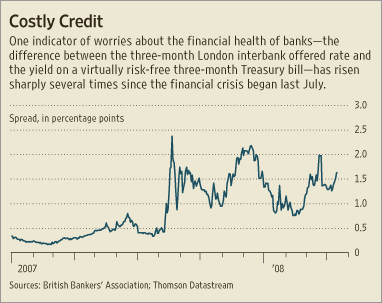
Libor became the talk last August when the sub-prime problem begin to surface, as world banks had been involved in making sizeable investments. Banks were suddenly wary of lending to each other because of the mounting losses (that reached over $350 billion as of last week). The 3-month Libor rate climbed 2.40 percentage points ABOVE yields on the Treasury Bills (the widest margin since 1987).

Now Libor methodology is coming into question and is starting to be pointed to as an additional cause to the credit crisis and problems. Many feel the need for MORE regulation on how Libor is set and published. From banks making their bids anonymously to moving the release time to 10 AM New York time (which would favor the US markets rather than the current skew towards Europe) – however only 3 U.S. banks contribute rates for the Libor numbers (Citi-group, B of A, and JP Morgan).

However, these changes need to be seriously reviewed as any changes in method could INCREASE volatility and may cause fewer banks to participate. Additionally – some of the changes may just be cosmetic and offer no real adjustments. For now it will continue to be used to set prices and a major measuring tool as to the credit health of the market.

__________________________________________________
More data this week – first housing


New home sales are expected to decline further this month and through-out the summer. The Case-Shiller just reported that U.S. metropolitan area home prices plunged 14.4% (more than economist expected) from a year earlier. The most since the index was first published in 2001. Analyst expect it to increase at-least through the end of the year.

RealtyTrac reported that foreclosure filings continue to increase and were up 65% in April from a year earlier. Expectations of foreclosures are for a continued increase through 2008 as the process for foreclosures and some states/cities have even curtailed the process – meaning that it will be a continue trickling increase.

Sales of existing homes (previously owned) which account for 85% of the market, fell 1% in April and the supply for unsold properties reached a record – reported by the National Association of Realtors.

``We continue to expect the U.S. housing market to get slightly worse before it gets better,'' Stephen Webster, the company's finance director, said in a conference call with journalists last week. ``We would like to see a few months of stable housing starts or increasing housing starts before we call the bottom.''

Additional data will be coming out this week and should send some upside and downside jolts to the market. Some would expect some pressure in the home sectors in the market – but don’t be surprised if we again see some bottom picking “the worst is behind us” mentality. For now – be wary of taking long hard delta positions in the home sectors – unless hedged.

_________________________________________________
Other News


Heavy put option trading in Leman and the massive increase of OTM put volatility has Dr. J issuing concerns that many are expecting another Bear Stearns – if the option paper is any indication.

BUD a target take-over – there are some rumors swirling about?

Lehman, Goldman, Morgan estimates are cut by Bank of America.

________________________________________________
Futures Pre-open


The futures were flat to down in the pre-market and then oil started pulling off pretty hard (already down $1.5) and is sending a good jolt to the futures. They are currently front running the cash by a couple of points. If oil continues to fall into the opening – expect Arb traders to leg into the short-futures and long cash basket. This could put some upside pressure on the indices at the opening.

_______________________________________________
Support / Resistance

The market had another big pull-back on Friday and broke the short-term supports. It looks like it is getting a boost in the AM from the pull back in oil. But at this point the action is more speculative based on Oil than anything else.

INDU 12250 / 12800 (We broke that 12600 short-term support and it is possible we could get a rally to move above it going forward. But Europe is down and while oil is pulling off sending the futures higher in the pre-market – this index is in a volatile area that could make quick moves up or down from this point. It may stall at 12600 which WAS a short-term support.)

NDX 1950 / 2000 (This index kept from falling to much from the huge move by over-weight AAPL that was up $4 on Friday which is about 5-6 points in the index. Again keep an eye on the big movers in this index to get an idea of this more volatile index.)

SPX 1380 / 1400 (We got down through the 1380 support area and looks like we may get above it at the opening. Can we close above it and get some strength to return?)

RUT 720 / 740 (We touched 720 and bounced on Friday – showing some strength in the broader market. Keep an eye on 720 – if we revisit it again and do NOT bounce it could pull down on the entire market.)

____________________________________________
Conclusion


The market is getting some volatility from oil – which is pretty volatile and creating inversion moves in the financial futures. The housing market – and Case-Shiller – along with other reports – continue to show more downward pressure in the housing market. The Libor is also a concern and volatility has not been abated as of now. The continued volatility in the market place is not reflective in the VIX – which I think should be in the mid 20s if it is any sign of what is going on. It clearly shows that there is NO fear in the market from investors side – that maybe continuing to call a top in oil and a bottom in the market.

The dollar continues to remain weak and gives back any gains that it makes (1 step forward – 2 steps back).

For now remain skeptical and hedge assets.


Friday, May 23, 2008

MP 5/23/08

Traders,

I got a lot of feedback about the oil preview yesterday – mostly having a political slant. I appreciate that gas prices are high and it is easy to blame one group of people. Finger pointing from responses came from every direction, OPEC, the oil companies, speculative traders, the Fed and the weak dollar. Sure – they all have something to do with it, but let’s for one second strip away all the blame and look at what oil is. It is a finite commodity, in which consumption is accelerating at an exponential pace and the extraction rate has flattened.


Granted there is premiums in oil from speculation, weak dollar, and political risk – but at the end of the day the intrinsic value because of the nature of oil is only going to rise. What IS debatable is how MUCH of the premium is attributed to speculation, weak dollar, or the plethora of other factors. Depending on how much value you place in those premiums – the range intrinsic value can be anywhere from $60 - $90. I doubt that we will ever see oil drop below $50 again in the foreseeable future. So at the end of the day we must understand that we are getting very close (if we have not already gotten there) to the inversion of consumption vs. extraction. And if you accept that as being true – oil is only going one way for now and that is up.


Sure we will see a volatility band and on any given day – oil will no doubt pull back and then pop again. So do not get caught up in the daily volatility, the “knee jerk” news stories, or what the talking heads are saying any given day.

_________________________________________________
Job-growth forecast


One of the leading indicators of the strength of the economy is job growth – which no doubt everyone agrees with. While the government methods have no doubt changed over the last several decades (including part-time, temps, excluding discourage workers, etc) – and while the measurement is hard to track on a year-over-year basis if those methods continue to change – we are still able to extract some indication of the real job growth picture.

The problem with Job growth measurements is looking at short-term trends vs. long-term. Sure the holiday season rolls around and part-time and new full-time jobs are created – so getting a better year-over-year measurement gives a better overall resolutions. However, that being said we will still hear the latest “short-term” trends which can send “knee jerk” reactions into the market.


The latest of these is coming from Treasury Sec. Henry Paulson – who is predicting that the tax rebates will create 500,000 new jobs this year. How he came to that conclusion, well I am not sure. The economist on the other-side are looking at the tax-rebate check as a one-trick pony that may artificially create a boost to government data for one quarter. While there may be SOME job creation, coupled with a pickup in retail sales it should be rather insignificant and those jobs (which could be part-time) made fade back out of the system. The median estimate by Bloomberg survey was for an increase of 158,500 jobs (resulting from the stimulus package).

``It is a one-time shot, a drug addict getting a hit,'' said William Dunkelberg, the National Federation of Independent Business chief economist in Washington. ``It will feel good for a quarter, but then the stimulus is gone and it's not clear what would fill that void.''

The reason to keep track of this information is that we MAY see some boost to some numbers – the trick is to filter out the impact of the stimulus and not get lulled in and start basing longer-term trading decisions on the numbers. It’s forecast not earnings that detail the future.

_________________________________________________
NYSE trading volume falls significantly – but U.S. volume rises


There has been many reports of lighter volume – being reported by the NYSE which is down over 26% this quarter. New routes have been picking up a tremendous amount of volume – over a spider web of networks. This has made it harder to track technical signals for many traders out there that rely on accurate data from the NASDAQ and NYSE.

``Technicians should be losing sleep over this,'' said Ralph Acampora, the 40-year Wall Street veteran who helped pioneer technical analysis. ``I can't be as trusting of my indicator, because I don't have all the data. More volume means there's more money and support, more demand and momentum. You need money to push stocks up.''


Bats and Direct Edge have been taking volume from the big players – and unless technicians are able to get accurate readings from ALL exchanges – technical assumptions could falter. Several new data firms have developed complied indicators from multiple exchanges – however for those relying directly on the primary exchanges may not get a clear signal. It is definitely time to analyze your data and making sure that you include third-party exchanges.

________________________________________________
Futures Pre-Open


The futures are getting hit in the pre-market as Oil moves back-up after yesterday’s retracement. The commodity market on the whole is pushing higher and the dollar (while yesterday seeing some strength and helping oil pull back) is still on average moved lower. Going into a holiday weekend and possible light volume (note: on ALL exchanges) could create some additional volatility going into the opening. The futures are front-running the cash for now – so we may see some Arb trader pressure on the cash basket going into the opening.

_______________________________________________
Support /Resistance


The market held those areas yesterday and saw a very slight rebound, which was not good news for the bulls (expecting a larger pop off the short-term support). Today will be key on how firms want to go home over the extended holiday weekend – many probably do NOT want to be holding long equity with any commodity risk exposure. Look at the short-term supports - closing above the supports is key for the bulls.

INDU 12600 / 12800 (Wednesday took us to 12600 and yesterday we treaded water above it. However it is NOT a place to get long – but for those bulls to flatten out there positions. If 12600 does NOT hold then 12400 will probably be the next short-term support.)

NDX 1950 / 2000 (We are still 14 points above the short-term support and could possibly stay above it going into the weekend. Unlike the broader indices this is driven by some over-weight stocks so keep an eye on AAPL, MSFT, INTC, and the other over-weights to get an indication where the big caps in the NASDAQ are going. A big slip in AAPL could drive this down through 1950 and AAPL has already made it’s big move into the summer. 1950 is tricky ground and a risk to get long – if you want to play it long at 1950, I would only do it with a Gamma position that is at the very least .25 : 1 to hard deltas. So on a four point slide down to 1946 area you should be flat and start to get short. That’s if you can take 4 points of pain – tighten up the Gamma to Hard Delta ratio if 4 points is too much to swallow.)

SPX 1390 / 1400 (Do NOT I repeat DO NOT get long at 1390 – yeah it is short-term support and yeah we COULD rally – but any long hard deltas at that line going into a 3 day week-end is NOT what you need – cause you will be going crazy on Monday when you can NOT trade. If you want to take shots on the long side at the 1390 level do it with a spread or soft deltas so any break-down will NOT be painful.)

RUT 720 / 740 (720 is a good short-term support – the key is that it HOLDS that to show good flow into the broader market. If that doesn’t hold expect the narrower based indices to follow. However if it holds and you see more volatility in the narrower based indices – it could just be noise.)

Sure we could rally out of here – off these short-term supports. But do you think anybody (other than some retail shot-takers) want to be holding naked long positions into a holiday weekend after the oil rally, Fed notes, and Moody’s news? Hey – I could be wrong and intraday the Fed could come out with some new stimulus or something could change – but if there is NO good news to get this to rally today – it will be about ONE thing – holding short-term supports over the weekend. Today is not a day to play the long side. It IS a day to play the short side if we break-down!


_____________________________________________
Conclusion


Don’t be stubborn, the market going up or down is not good or bad – just position yourself for the direction. We had a very surprising run for the last 2 months, be thankful and take you profits off the table. There are still some good sectors to get into out there – but no matter how much you see a sector get beat-up (like Financials or Airlines) that doesn’t mean you should be bottom picking. They are down for good reason and remember one important fact Fundamentals ALWAYS trump Techinicals in the end. Techinicals only work if the fundamentals of the company are none volatile. But no matter how low a company gets because there is some fundamental problems it can ALWAYS go lower – regardless of technicals. So avoid the financials and airlines for now.

For bulls look for sectors in the energy area and also benefit from a combination of weak dollar and strong commodities. For Bears get ready for broader downward pressure across the bigger indices as the few good sectors will NOT be able to keep the broader market from sliding. Commodities is the strong play – so are the foreign currencies to the upside. It is a mixed game and the U.S. economy is in the dog house – do NOT bet on the U.S. economy – bet on the Global economy and commodities.

As my friend Amy always says – “The trend is your friend, and don’t sell your friends short!”


Thursday, May 22, 2008

Oil Primer

Oil Primer


Recently – in the news there is much speculation as to WHY oil prices are so high. Everything from OPEC is to blame to speculators driving up the price. People didn’t care about oil prices or how HIGH they went, until it hit them at the gas pumps.

NOW people need answers and the complexity of how commodities, futures, extraction rates – are too boring or dry for most people to comprehend. They need to point a finger at somebody or a group of people.Politicians and the media will look at everything except the math – in order to make sense of something. It is easier to believe in a conspiracy or hate a group of people – then it is to swallow the math.


Since Hubbert (a geologist predicted the U.S. peak – extraction vs. consumption in 70s), which lead to an oil crisis in this country – other economist, energy traders, geologist, and government agencies have be preparing themselves for the eventual peak.There are some facts about oil - which we ALL need to understand before we start making accusations as to OPEC or Speculators that are driving the price.


1. Extraction Rate (currently aprox. 85 million barrels per day) –Maximum is aprox. 90 million barrels per day

Oil is extracted via pressure.When more oil comes out of the ground – the pressure drops. Water and Gasses are FORCED into the ground to build that pressure back up to extract the oil. All oil wells have a MAXIUM extraction rate.
This is simple physics – you just can’t add more holes in the ground to get it out any faster. You also can only increase the pressure to a certain PSI to maintain maximum extraction. Currently the world is running at 95% of maximum extraction on proven reserves.


2. Consumption Rate (currently aprox. 87 million barrels per day)

Global Demand is 2% per year (compounding)The US has remained relatively flat on oil consumption over the last 3 years. The US makes up about 20% of the entire world’s oil consumption, but is rapidly losing ground to the emerging markets. Global consumption is accelerating – China is increasing at a rate of 5-7% per year.
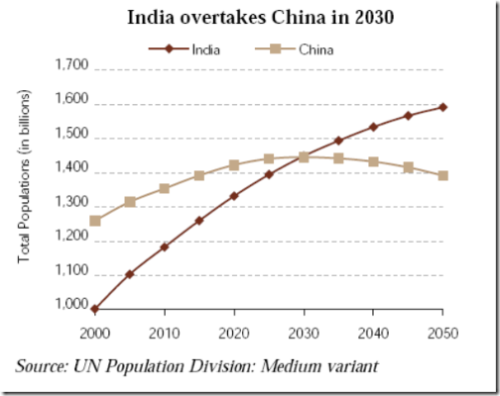
The US Energy Information Administration (EIA) annual report stated that current demand growth shows as 37% increase from 2007 to 2030 to 118 million barrels per day. Most of the demand will come from emerging markets with China and India at the top. World population growth is expected to be double in 2030 of that in 1980.


3. Reserves

Many people think reserves mean some large tank somewhere with gas in it. Actual reserves are just where the oil is underground. Reserves fall into two categories – proven and unproven. Proven means that we know with a fairly high degree of likelihood as to the amount of oil in the ground and with current technology are able to extract it, unproven fall into two sub-categories (possible and probable) – with different degrees of likelihood. All PROVEN reserves have been found in the world over a couple of decades ago. Only unproven reserves have recently been discovered and either the technology to extract it is either not available or too costly. Currently oil is being extracted from proven reserves at 95-98% of their maximum extraction rate.
SPR – the Strategic Petroleum Reserves are underground caves in the Gulf of Mexico that can store up to 800 million barrels of oil. Currently it has about 700 million barrels. These caves are located near refineries in Texas and Louisiana. The SPR has enough oil to last the U.S. 50-60 days.

At the beginning of May, Congress voted to HALT oil shipments (70,000 barrels per day) to the SPR to FREE up supply. Several countries have SPRs – but collectively they are a fraction of what the monthly global consumption rate is.

4. Reserve LIFE – how much oil based on CURRENT extractions.

This becomes rather skeptical – because we must rely on the country telling us the TRUTH as to their PROVEN oil reserves. .

However – these numbers are extremely suspect as OPEC continues to RAISE the amount of proven oil reserves. Recently it has been revealed; via classified documents that Kuwait has overstated their proven reserves by as much as 50%. Mexico, Russia, and the US are at 10-20 years of oil in their production reserves.
Regardless – if we hold these reserves to be accurate – then most oil fields look to have about 75-100 years left

5. OIL is not GAS The U.S. has a refinery capacity issues

We can only refine the oil at a certain rate – just like extraction. This has traditionally been a bottle neck in this country and we have not built any NEW refineries in the last 20 years. It takes time to convert oil into the other products we need. Remember the SPR is OIL – not GAS!


________________________________________________

Time to start focusing on the BIG PICTURE and stop worrying about the minutia and blame game!Like will all commodities – the basic math is about supply vs. demand, nothing more, and nothing less. Oil is a soft commodity – meaning that once it is used you can NOT reuse it or resell it. It is also a depleting commodity – with a finite supply. These two facts are inescapable.

Additionally – regardless of media stories – if we just stick to what we ACTUALLY know – we can draw some simple deductions from the above information.


1. Extra SuppliesThe SPR only has enough oil to last us 50-60 days in a crisis.


There are NO secret warehouses of gas. That means the global pretty much consumes what it extracts on a daily basis (give-or-take a few thousand barrels). It’s sort of like living pay-check to pay-check. You might be up this month, but next month you could be short. Extra supplies can be used up in a couple of days. So what we have today may NOT be here tomorrow. Any talk about extra supplies is fairly silly – when it is obvious (even with the SPR being utilized) we would be out of oil in a few weeks. You also might hear a story about a couple of tankers hording oil, or a warehouse with oil – compared to the daily consumption rates of oil – even in this country – that tanker or warehouse would be dry in a day.

2. Consumption

We continue to ignore what happens in the Global world until it hits us in the pocket book. Rogers, Buffet, Ross, Pickens, and other billionaire investors have been talking about China and the Bull Run in commodities for the last 5 years. They have already been on the train and making billions.
However, we lazy Americans hear the sound-bite and change the channel. For most of us are NOT investors in commodities. We don’t care. But WAIT it is now affecting me at the gas tank. Now we take notice.
China has been growing at an accelerated rate for the last 5 years. Same is true with India and other emerging markets. These countries have been slowly shifting from exporters of raw materials to importers. Cement, Steel, Copper, and OIL – more recently soft commodities (like Rice, Wheat, etc.) they are booming populations, booming manufacturing, booming cities. It is not stopping. They have taken first manufacturing jobs from the U.S., then service jobs, and now commodities. It is not going to stop.
We cannot argue that the math of global consumption WILL and HAS eventually out-paced extraction rates. Even the EIA has predicted a doubling of global population growth by 2030. That population growth is NOT happening in the U.S. it is happening in China and elsewhere. Same is true with consumption – while ours has been flat – theirs is growing at 5-7%.


No one denies (for the most part) including the U.S. government and several oil producing nations that oil is a finite resource, that it can only be extracted at a certain rate, and that we will eventually hit maximum extraction. The debate is WHEN it will happen. Information from the top geologist and scientist and oil experts were pooled for a paper (Hirsch Report) for the U.S. Energy department in 2006 to predict when maximum extraction would happen. They run from 2006 – 2020. Most of the predictions were for 2010.


4. The U.S. Government KNOWS
The U.S. Government had the Energy Agency investigate the oil concern – including the above mention predictions for peak oil (extraction vs. consumption). The government is VERY concern – and the document prepared for the government clearly states the concern in the opening remarks.

================================
Hirsch Report


The peaking of world oil production presents the U.S. and the world with an unprecedented risk management problem. As peaking is approached, liquid fuel prices and price volatility will increase dramatically, and, without timely mitigation, the economic, social, and political costs will be unprecedented. Viable mitigation options exist on both the supply and demand sides, but to have substantial impact, they must be initiated more than a decade in advance of peaking.Important observations and conclusions from this study are as follows:
1. When world oil peaking will occur is not known with certainty. A fundamental problem in predicting oil peaking is the poor quality of and possible political biases in world oil reserves data. Some experts believe peaking may occur soon. This study indicates that “soon” is within 20 years.
2. The problems associated with world oil production peaking will not be temporary, and past “energy crisis” experience will provide relatively little guidance. The challenge of oil peaking deserves immediate, serious attention, if risks are to be fully understood and mitigation begun on a timely basis.
3. Oil peaking will create a severe liquid fuels problem for the transportation sector, not an “energy crisis” in the usual sense that term has been used.
4. Peaking will result in dramatically higher oil prices, which will cause protracted economic hardship in the United States and the world. However, the problems are not insoluble. Timely, aggressive mitigation initiatives addressing both the supply and the demand sides of the issue will be required.
5. In the developed nations, the problems will be especially serious. In the developing nations peaking problems have the potential to be much worse.

6. Mitigation will require a minimum of a decade of intense, expensive effort, because the scale of liquid fuels mitigation is inherently extremely large.

7. While greater end-use efficiency is essential, increased efficiency alone will be neither sufficient nor timely enough to solve the problem. Production of large amounts of substitute liquid fuels will be required. A number of commercial or near-commercial substitute fuel production technologies are currently available for deployment, so the production of vast amounts of substitute liquid fuels is feasible with existing technology.

8. Intervention by governments will be required, because the economic and social implications of oil peaking would otherwise be chaotic. The experiences of the 1970s and 1980s offer important guides as to government actions that are desirable and those that are undesirable, but the process will not be easy.


================================================

We can certainly continue to be whipsawed by the media or a politician during the election year. We can easily blame OPEC or speculators. We can easily jump when an analyst tells of their predictions. We can easily read TOO much into this story or that. We can easily look to conspiracies. We can easily fall prey to many things to explain the higher prices of gas. But we can NOT explain away the simple facts of supply and demand – it is just math.

This was coming – we all knew it – so did the government (Hirsch Report). We have entered a new era.

While Pickens is making billions on the current rise in crude prices, he just bought a 1,000 wind turbines from GE and is building the largest wind farm in the U.S., he is also investor in natural gas, coal, and solar. He sees the writing on the wall – he is not trying to drive prices higher in some conspiracy – he KNOWS that we are already at maximum extraction and is already making his NEXT investments in energy (Wind, Solar, Gas, Coal) – why does he make billions – because he puts his money where his mouth is and is also the EARLIER pioneer or adopter in new business.

Pickens is the premier oil man and when you see the guy that made BILLIONS in oil now investing 100s of millions in Coal, Wind, Natural Gas, and Solar - he is looking out 1 year, 5 years, 10 years and saying we are being FORCED to find alternative energy because we can NOT keep up with consumption. It’s time to stop focusing on the minutia and blame game and start looking at the BIG PICTURE – Supply and Demand.Oil prices are high and they should and may come down – but that doesn’t change that there is some real concerns about Supply vs. Demand.

MP 5/22/08 - Oil Primer

Traders,

Well I guess the Moody’s story got pushed to the back burner – since oil rallying hard along with the Fed minutes took center stage. However, Moody’s did get hit over 15% (7 points) – for now their story is being over shadowed – but keep it filed away – it could cause serious pressure in the financial sector (and pensions).


The oil news took center stage as it made a huge rally. It’s as if that one opening statement in the interview with Pickens on CNBC (Tuesday morning) got people really thinking about the REALITIES of oil ($600 billion leaving this country per year and that we are at maximum (or close to) extraction vs. ever increase in consumption.)

The Hirsch Report (for the Department of Energy) in 2006 – has predicted peak oil in 2010 (on average) (range 2006-2020) – is starting to see that inversion sooner rather than later. Additionally – supply seems to be a real problem since Congress voted to stop shipping oil (70k barrels per day) to the Strategic Petroleum Reserve – to free up supplies. Add in that refinery capacities are running at full capacity – we don’t have much more room to go higher.


After hearing about the refineries running 24/7 at full capacity – it reminds me of those old Star Trek episodes when Capt. Kirk is yelling to Scotty for more power, and Scotty is yelling from the engine room with red lights blinking and smoke pouring out of the warp drive “I’m given her all she’s got, Capt’n!” – I see that picture happening in every refinery in this country. Typically you don’t want to be “red-lining” your refineries for very long and would rather maintain operations around 80-90% - not 110%, well at least not days on end.

_____________________________________________________________
Oil - the world's life blood!


The blame is every-where, Oil companies, OPEC, speculators, weak dollar, the Fed, the Government. We traditionally don’t care about anything until it affects us, now with gas prices hitting us in the pocket – well someone is to blame. But after you listen to Pickens – he makes some clear and simple points. Sure there are some premium attached to oil and they can all be estimated, dollar risk is about 10-15%, political stability of the region is about 5-15% depending, speculation is anywhere between 5-15%, but at the very end of the day at its intrinsic value it comes down to supply vs. demand.

China had made it very clear as they are buying up HUGE sums of oil and futures in EVERY oil producing country – they NEED it – and unlike the U.S. – they do NOT care who they do business with (Iran, Sudan, Venezuela, etc.) additionally they don’t really care about cost as long as they can get it in bulk.

Global consumption is increasing at 2% per year COMPOUNDED – and the Department of Energy predicts by 2025 world oil consumption will increase 35% to over 118 million barrels per day. Maximum extraction on Proven reserves is predicted at around 90 million per day (without any issues) but they are already running very close to maximum extraction (with current problems) and that is around 85-86 million per day. However – consumption on the global scale is 87 million per day. It is simple math – we are consuming MORE than we are extracting.

Since there is a lot of talk about oil – I thought I would put a little primer together – please note this is not to justify the current price of oil – but simply explain some basic issues.

==============================================
Oil Primer


Recently – in the news there is much speculation as to WHY oil prices are so high. Everything from OPEC is to blame to speculators driving up the price. People didn’t care about oil prices or how HIGH they went, until it hit them at the gas pumps. NOW people need answers and the complexity of how commodities, futures, extraction rates – are too boring or dry for most people to comprehend. They need to point a finger at somebody or a group of people.

Politicians and the media will look at everything except the math – in order to make sense of something. It is easier to believe in a conspiracy or hate a group of people – then it is to swallow the math.

Since Hubbert (a geologist predicted the U.S. peak – extraction vs. consumption in 70s), which lead to an oil crisis in this country – other economist, energy traders, geologist, and government agencies have be preparing themselves for the eventual peak.

There are some facts about oil - which we ALL need to understand before we start making accusations as to OPEC or Speculators that are driving the price.


1. Extraction Rate (currently aprox. 85 million barrels per day) –
Maximum is aprox. 90 million barrels per day Oil is extracted via pressure.

When more oil comes out of the ground – the pressure drops. Water and Gasses are FORCED into the ground to build that pressure back up to extract the oil. All oil wells have a MAXIUM extraction rate. This is simple physics – you just can’t add more holes in the ground to get it out any faster. You also can only increase the pressure to a certain PSI to maintain maximum extraction. Currently the world is running at 95% of maximum extraction on proven reserves.


2. Consumption Rate (currently aprox. 87 million barrels per day)
Global Demand is 2% per year (compounding)

The US has remained relatively flat on oil consumption over the last 3 years. The US makes up about 20% of the entire world’s oil consumption, but is rapidly losing ground to the emerging markets. Global consumption is accelerating – China is increasing at a rate of 5-7% per year. The US Energy Information Administration (EIA) annual report stated that current demand growth shows as 37% increase from 2007 to 2030 to 118 million barrels per day. Most of the demand will come from emerging markets with China and India at the top. World population growth is expected to be double in 2030 of that in 1980.

3. Reserves
Many people think reserves mean some large tank somewhere with gas in it. Actual reserves are just where the oil is underground. Reserves fall into two categories – proven and unproven. Proven means that we know with a fairly high degree of likelihood as to the amount of oil in the ground and with current technology are able to extract it, unproven fall into two sub-categories (possible and probable) – with different degrees of likelihood. All PROVEN reserves have been found in the world over a couple of decades ago. Only unproven reserves have recently been discovered and either the technology to extract it is either not available or too costly. Currently oil is being extracted from proven reserves at 95% of their maximum extraction rate.

SPR – the Strategic Petroleum Reserves are underground caves in the Gulf of Mexico that can store up to 800 million barrels of oil. Currently it has about 700 million barrels. These caves are located near refineries in Texas and Louisiana. The SPR has enough oil to last the U.S. 50-60 days. At the beginning of May, Congress voted to HALT oil shipments (70,000 barrels per day) to the SPR to FREE up supply. Several countries have SPRs – but collectively they are a fraction of what the monthly global consumption rate is.

4. Reserve LIFE – how much oil based on CURRENT extractions.

This becomes rather skeptical – because we must rely on the country telling us the TRUTH as to their PROVEN oil reserves. Recently it has been revealed; via classified documents that Kuwait has overstated their proven reserves by as much as 50%. Regardless – if we hold these reserves to be accurate – then most oil fields look to have about 75-100 years left.

However – these numbers are extremely suspect as OPEC continues to RAISE the amount of proven oil reserves. Mexico, Russia, and the US are at 10-20 years of oil in their production reserves.

5. OIL is not GAS
The U.S. has a refinery capacity issues – we can only refine the oil at a certain rate – just like extraction. This has traditionally been a bottle neck in this country and we have not built any NEW refineries in the last 20 years. It takes time to convert oil into the other products we need. Remember the SPR is OIL – not GAS!


Time to start focusing on the BIG PICTURE and stop worrying about the minutia and blame game!

Like will all commodities – the basic math is about supply vs. demand, nothing more, and nothing less. Oil is a soft commodity – meaning that once it is used you can NOT reuse it or resell it. It is also a depleting commodity – with a finite supply. These two facts are inescapable.

Additionally – regardless of media stories – if we just stick to what we ACTUALLY know – we can draw some simple deductions from the above information.


1. Extra Supplies
The SPR only has enough oil to last us 50-60 days in a crisis. There are NO secret warehouses of gas. That means the global pretty much consumes what it extracts on a daily basis (give-or-take a few thousand barrels). It’s sort of like living pay-check to pay-check. You might be up this month, but next month you could be short. Extra supplies can be used up in a couple of days. So what we have today may NOT be here tomorrow. Any talk about extra supplies is fairly silly – when it is obvious (even with the SPR being utilized) we would be out of oil in a few weeks. You also might hear a story about a couple of tankers hording oil, or a warehouse with oil – compared to the daily consumption rates of oil – even in this country – that tanker or warehouse would be dry in a day.


2. Consumption
We continue to ignore what happens in the Global world until it hits us in the pocket book. Rogers, Buffet, Ross, Pickens, and other billionaire investors have been talking about China and the Bull Run in commodities for the last 5 years. They have already been on the train and making billions. However, we lazy Americans hear the sound-bite and change the channel. For most of us are NOT investors in commodities. We don’t care. But WAIT it is now affecting me at the gas tank. Now we take notice.

China has been growing at an accelerated rate for the last 5 years. Same is true with India and other emerging markets. These countries have been slowly shifting from exporters of raw materials to importers. Cement, Steel, Copper, and OIL – more recently soft commodities (like Rice, Wheat, etc.) they are booming populations, booming manufacturing, booming cities. It is not stopping. They have taken first manufacturing jobs from the U.S., then service jobs, and now commodities. It is not going to stop.

We cannot argue that the math of global consumption WILL and HAS eventually out-paced extraction rates. Even the EIA has predicted a doubling of global population growth by 2030. That population growth is NOT happening in the U.S. it is happening in China and elsewhere. Same is true with consumption – while ours has been flat – theirs is growing at 5-7%.


3. Peak Oil http://en.wikipedia.org/wiki/Peak_oil

No one denies (for the most part) including the U.S. government and several oil producing nations that oil is a finite resource, that it can only be extracted at a certain rate, and that we will eventually hit maximum extraction. The debate is WHEN it will happen. Information from the top geologist and scientist and oil experts were pooled for a paper (Hirsch Report) for the U.S. Energy department in 2006 to predict when maximum extraction would happen. They run from 2006 – 2020. Most of the predictions were for 2010.

4. The U.S. Government KNOWS
The U.S. Government had the Energy Agency investigate the oil concern – including the above mention predictions for peak oil (extraction vs. consumption). The government is VERY concern – and the document prepared for the government clearly states the concern in the opening remarks.

================================
Hirsch Report http://www.netl.doe.gov/publications/others/pdf/Oil_Peaking_NETL.pdf

The peaking of world oil production presents the U.S. and the world with an unprecedented risk management problem. As peaking is approached, liquid fuel prices and price volatility will increase dramatically, and, without timely mitigation, the economic, social, and political costs will be unprecedented. Viable mitigation options exist on both the supply and demand sides, but to have substantial impact, they must be initiated more than a decade in advance of peaking.

Important observations and conclusions from this study are as follows:

1. When world oil peaking will occur is not known with certainty. A fundamental problem in predicting oil peaking is the poor quality of and possible political biases in world oil reserves data. Some experts believe peaking may occur soon. This study indicates that “soon” is within 20 years.

2. The problems associated with world oil production peaking will not be temporary, and past “energy crisis” experience will provide relatively little guidance. The challenge of oil peaking deserves immediate, serious attention, if risks are to be fully understood and mitigation begun on a timely basis.

3. Oil peaking will create a severe liquid fuels problem for the transportation sector, not an “energy crisis” in the usual sense that term has been used.

4. Peaking will result in dramatically higher oil prices, which will cause protracted economic hardship in the United States and the world. However, the problems are not insoluble. Timely, aggressive mitigation initiatives addressing both the supply and the demand sides of the issue will be required.

5. In the developed nations, the problems will be especially serious. In the developing nations peaking problems have the potential to be much worse.

6. Mitigation will require a minimum of a decade of intense, expensive effort, because the scale of liquid fuels mitigation is inherently extremely large.

7. While greater end-use efficiency is essential, increased efficiency alone will be neither sufficient nor timely enough to solve the problem. Production of large amounts of substitute liquid fuels will be required. A number of commercial or near-commercial substitute fuel production technologies are currently available for deployment, so the production of vast amounts of substitute liquid fuels is feasible with existing technology.

8. Intervention by governments will be required, because the economic and social implications of oil peaking would otherwise be chaotic. The experiences of the 1970s and 1980s offer important guides as to government actions that are desirable and those that are undesirable, but the process will not be easy.

=================================================

We can certainly continue to be whipsawed by the media or a politician during the election year. We can easily blame OPEC or speculators. We can easily jump when an analyst tells of their predictions. We can easily read TOO much into this story or that. We can easily look to conspiracies. We can easily fall prey to many things to explain the higher prices of gas. But we can NOT explain away the simple facts of supply and demand – it is just math.


This was coming – we all knew it – so did the government (Hirsch Report). We have entered a new era. While Pickens is making billions on the current rise in crude prices, he just bought a 1,000 wind turbines from GE and is building the largest wind farm in the U.S., he is also investor in natural gas, coal, and solar. He sees the writing on the wall – he is not trying to drive prices higher in some conspiracy – he KNOWS that we are already at maximum extraction and is already making his NEXT investments in energy (Wind, Solar, Gas, Coal) – why does he make billions – because he puts his money where his mouth is and is also the EARLIER pioneer or adopter in new business.

Pickens is the premier oil man and when you see the guy that made BILLIONS in oil now investing 100s of millions in Coal, Wind, Natural Gas, and Solar - he is looking out 1 year, 5 years, 10 years and saying we are being FORCED to find alternative energy because we can NOT keep up with consumption. It’s time to stop focusing on the minutia and blame game and start looking at the BIG PICTURE – Supply and Demand.


Oil prices are high and they should and may come down – but that doesn’t change that there is some real concerns about Supply vs. Demand.


No doubt there is weak dollar premium, speculation premium, political risk premium, weather premium in oil prices - but at it's basis we can not deny that supply vs. demand is a growing REAL problem.


___________________________________________________________
Initial Jobless Claims – declined?


A bright spot after the oil news, Fed notes, and the Moody’s story – the jobless claims fell 9,000 from a revised 374,000 the prior week – reported by the BLS. Some analyst are hoping or maybe predicting that the lay-offs have eased and is showing a sign of relief. But the short-term numbers and revisions are usually more volatile – as they have to weed through the numbers. The 4-week moving average – a less volatile indicator – rose to 372,250 from 367,250 – so while maybe we had a week reprieve the long-term trend seems to be increasing.


The problem with measuring unemployment benefits is the discourage worker issue. After 18 months – if those people have NOT found a job then they are DROPPED from being counted as unemployed, they are relabeled as “Discouraged Worker” and then tossed into Never-Never Land never to be counted again. Traditional methods of measuring unemployment’s prior to the last couple of decades of methodology change has it more in line with 12%. Yeah – that seems ridiculously high – but maybe that only seems high because we are so used to hearing it low for several decades. However, you maybe be able to label people to include them into the job numbers (temp, part-time – what next volunteer and illegal migrant workers?) or exclude them from the unemployment (Discouraged workers) – the fact remains no matter what label you put on them it just can’t change the math.


For now we just have to extrapolate how many are falling off the unemployment vs. how many are signing on – Damn those Discourage Workers!

__________________________________________________________
Futures Pre-Market

The futures seemed flat – but then started losing ground – then popped with the declining jobless claim numbers – but are now flat. While the price fluctuations are not big in the pre-market – they are still no doubt volatile. Expect to see Arb traders sideline and let the opening determine itself. After yesterday’s moves and news – I don’t think anyone is willing to leg long or short.

__________________________________________________________
Support / Resistance


Pull back to short-term resistance. Yesterday I mentioned that if the INDU broke 12800 it would probably see 12600 as a short-term support and guess what we halted the slide right at 12600. The other indices also broke down through their short-term supports as well. This is a basing and testing area – a place to be careful getting long or short.

INDU 12600 / 12800 (12600 is a very short-term support and need to hold today otherwise the next area is about 12,250. This is not a place to load up in one direction or another – just make sure to have some positive Gamma and let the market MAKE you profit in either direction.)

NDX 1950 / 2000 (While I think 1950 could be short-term support and we could see a small rally off it back towards 2k – I don’t think we will rally above 2k but rather see serious resistance there. This is a trader’s area for action and investors should be hedged and not take a position. I think if we don’t HOLD 1950 then look out below because 1900 is easily in the cards.)

SPX 1380 / 1400 (If we break the 1380-85 area of support then 1360 and possibly 1340 could be visited. I think any rally will struggle at 1420 if it can break through 1400. Again – you better have all your long hard assets hedged. We could rally but it will be tough going.)

RUT 720 / 740 (720 is just a short-term low shoulder area that you could trade around – but don’t get naked long expecting a long-term rally going forward. Sure we could hit 720 and bounce – but it is more than likely not breaking through 740 any time soon.)

We had a great 2 month rally from the bottom. The market gave longs the opportunity based on optimistic to get OUT of those longs or roll-up your hedges. But the economy is continuing to face hardship which we can NOT ignore. Hedge those positions!

_______________________________________________________
Conclusions


I think Moody’s got a lucky break with the Oil and Fed Note news – well I guess the stock didn’t after it got whacked. But probably one of the biggest stories this year has been pushed onto the back burner – so at least CNBC and other news agencies are not focusing on it – for now. Regardless – it still put the hurt on in the financial sector and also other credit rating agencies (McGraw the parent company of S&P got hit from the news).

I also heard some crazy if not foolish buy recommendations in Airline companies because the stocks have been so beaten up. Hello – can you say Jet Fuel. These companies are getting squeezed and just came out of bankruptcy – anyone thinking they are a great buy here – well I have a new condo development in Miami beach to sell you. If the billionaires like Buffet – say NEVER buy an airline company – that is good enough for me – specially with oil climbing.

Oil got a huge jolt that last few days and yeah – could pull back, but do NOT go looking for a major crash or correction. A pull back to $100 would mean more buyers will step in. Airlines, Energy companies, Shipping companies have been buying more futures than spot price to get in front of the rally – any pull back will see these companies jump right in to protect (hedge) the future price of oil. Expect volatility in oil maybe 100-150 range and that will also inject huge volatility in the market. If oil pulls off 10 points in the day the market will act euphoric and rally 200 points - but do NOT get caught up in that.

Expect volatility in the market – maybe not as much as in the DNC convention – but this is the Year of Volatility!